International Conference on Polymerization
International Conference on
Polymerization Catalysis, Flexible Polymer and Nanotechnology
September 06-07, 2018 Dubai, UAE


International Conference on
September 06-07, 2018 Dubai, UAE
Researchers at the Karlsruhe Institute of Technology (KIT) and the University of Toronto have proposed a method enabling air conditioning and ventilation systems to produce synthetic fuels from carbon dioxide (CO2) and water from the ambient air. Compact plants are to separate CO2 from the ambient air directly in buildings and produce synthetic hydrocarbons which can then be used as renewable synthetic oil. The team now presents this "crowd oil" concept in Nature Communications.
To prevent the disastrous effects of global climate change, human-made greenhouse gas emissions must be reduced to "zero" over the next three decades. This is clear from the current special report of the Intergovernmental Panel on Climate Change (IPCC). The necessary transformation poses a huge challenge to the global community: entire sectors such as power generation, mobility, or building management must be redesigned. In a future climate-friendly energy system, synthetic energy sources could represent an essential building block: "If we use renewable wind and solar power as well as carbon dioxide directly from the ambient air to produce fuels, large amounts of greenhouse gas emissions can be avoided," says Professor Roland Dittmeyer from the Institute for Micro Process Engineering (IMVT) at KIT.
Due to the low CO2 concentration in the ambient air -- today, the proportion is 0.038 percent -- large quantities of air have to be treated in large filter systems in order to produce significant quantities of synthetic energy sources. A research team led by Dittmeyer and Professor Geoffrey Ozin from the University of Toronto (UoT) in Canada now proposes to decentralize the production of synthetic energy sources in the future and to link them to existing ventilation and air conditioning systems in buildings. According to Professor Dittmeyer, the necessary technologies are essentially available, and the thermal and material integration of the individual process stages is expected to enable a high level of carbon utilization and a high energy efficiency.
"We want to use the synergies between ventilation and air-conditioning technology on the one hand and energy and heating technology on the other to reduce the costs and energy losses in synthesis. In addition, 'crowd oil' could mobilize many new actors for the energy transition. Private photovoltaic systems have shown how well this can work." However, the conversion of CO2 would require large amounts of electrical power to produce hydrogen or synthesis gas. This electricity must be CO2-free, i.e. it must not come from fossil sources. "An accelerated expansion of renewable power generation, including through building-integrated photovoltaics, is therefore necessary," says Dittmeyer.

In a joint publication in the journal Nature Communications, the scientists led by Roland Dittmeyer from KIT and Geoffrey Ozin from UoT use quantitative analyses of office buildings, supermarkets and energy-saving houses to demonstrate the CO2 saving potential of their vision of decentralized conversion plants coupled to building infrastructure. They reckon that a significant proportion of the fossil fuels used for mobility in Germany could be replaced by "crowd oil." According to the team's calculations, for example, the amount of CO2 that could potentially be captured in the ventilation systems of the approximately 25,000 supermarkets of Germany's three largest food retailers alone would be sufficient to cover about 30 percent of Germany's kerosene demand or about eight percent of its diesel demand. In addition, the energy sources produced could be used in the chemical industry as universal synthesis building blocks.
The team can rely on preliminary investigations of the individual process steps and process simulations, among others from the Kopernikus project P2X of the Federal Ministry of Education and Research. On this basis, the scientists expect an energy efficiency -- i.e. the proportion of electrical energy used that can be converted into chemical energy -- of around 50 to 60 percent. In addition, they expect carbon efficiency -- i.e. the proportion of spent carbon atoms found in the fuel produced -- to range from around 90 to almost 100 percent. In order to confirm these simulation results, IMVT researchers and project partners are currently building up the fully integrated process at KIT, with a planned CO2 turnover of 1.25 kilograms per hour.
At the same time, however, the scientists have found that the proposed concept -- even if it were introduced all over Germany -- would not be able to fully meet today's demand for crude oil products. Reducing the demand for liquid fuels, for example through new mobility concepts and the expansion of local public transport, remains a necessity. Although the components of the proposed technology, such as the plants for CO2 capture and the synthesis of energy sources, are already commercially available in some cases, the researchers believe that major research and development efforts and an adaptation of the legal and social framework conditions are still required in order to put this vision into practice.
The market for organic solar cells is expected to grow more than 20% between 2017 and 2020, driven by advantages over traditional silicon solar cells: they can be mass produced at scale using roll-to-roll processing; the materials comprising them can be easily found in the earth and could be applied to solar cells through green chemistry; they can be semitransparent and therefore less visually intrusive -- meaning they can be mounted on windows or screens and are ideal for mobile devices; they are ultra-flexible and can stretch; and they can be ultra-lightweight.
Unlike silicon solar cells, however, organic cells are highly vulnerable to moisture, oxygen and sunlight itself. State-of-the-art remediation involves incapsulating the cell, which adds to production cost and unit weight, while reducing efficiency.
Researchers at the New York University Tandon School of Engineering have discovered a remarkable means of making organic solar panels more robust, including conferring resistance to oxygen, water and light by doing the opposite: removing, not adding, material.

The team, led by André Taylor, professor of chemical and biomolecular engineering at the NYU Tandon School of Engineering, and including Jaemin Kong, a post-doctoral researcher at NYU, and researchers at Yale University's Transformative Materials and Devices lab, performed the molecular equivalent of hair removal by waxing: they employed an adhesive tape to strip the electron-accepting molecules -- the conjugated fullerene derivative Phenyl-C61-butyric acid methyl ester (PCBM) -- from the topmost surface of the photoactive layer of the solar cell, leaving only non-reactive organic polymers exposed. One of the major culprits in device degradation is the oxidation of these fullerene derivatives. Removing PCBM from the exposed film surface reduces the chance of encounters with oxidation sources such as oxygen molecules and water, the latter being especially damaging to PCBM.
In Underwater Organic Solar Cells via Selective Removal of Electron Acceptors near the Top Electrode, a cover story in the April issue of ACS Energy Letters, the team tested an organic cell whose active layer is a blend of PCBM and the more resilient conjugated polymer, poly(3-hexylthiophene) (P3HT). After applying the adhesive tape to the surface of the photoactive layer of the film, they treated the cell with heat and pressure, and, once the film had returned to room temperature, slowly removed the tape from the film surface.
Afterward, only six percent of the PCBM acceptor components remained, according to the investigators, creating a polymer-rich surface. They explained that this minimized contact of the fullerene electron acceptors with oxygen and water molecules, while the polymer-rich surface dramatically enhanced the?adhesion between the photoactive layer and the top metal electrode, ?which happens to prevent another problem that comes with flexion: delamination of the electrode.
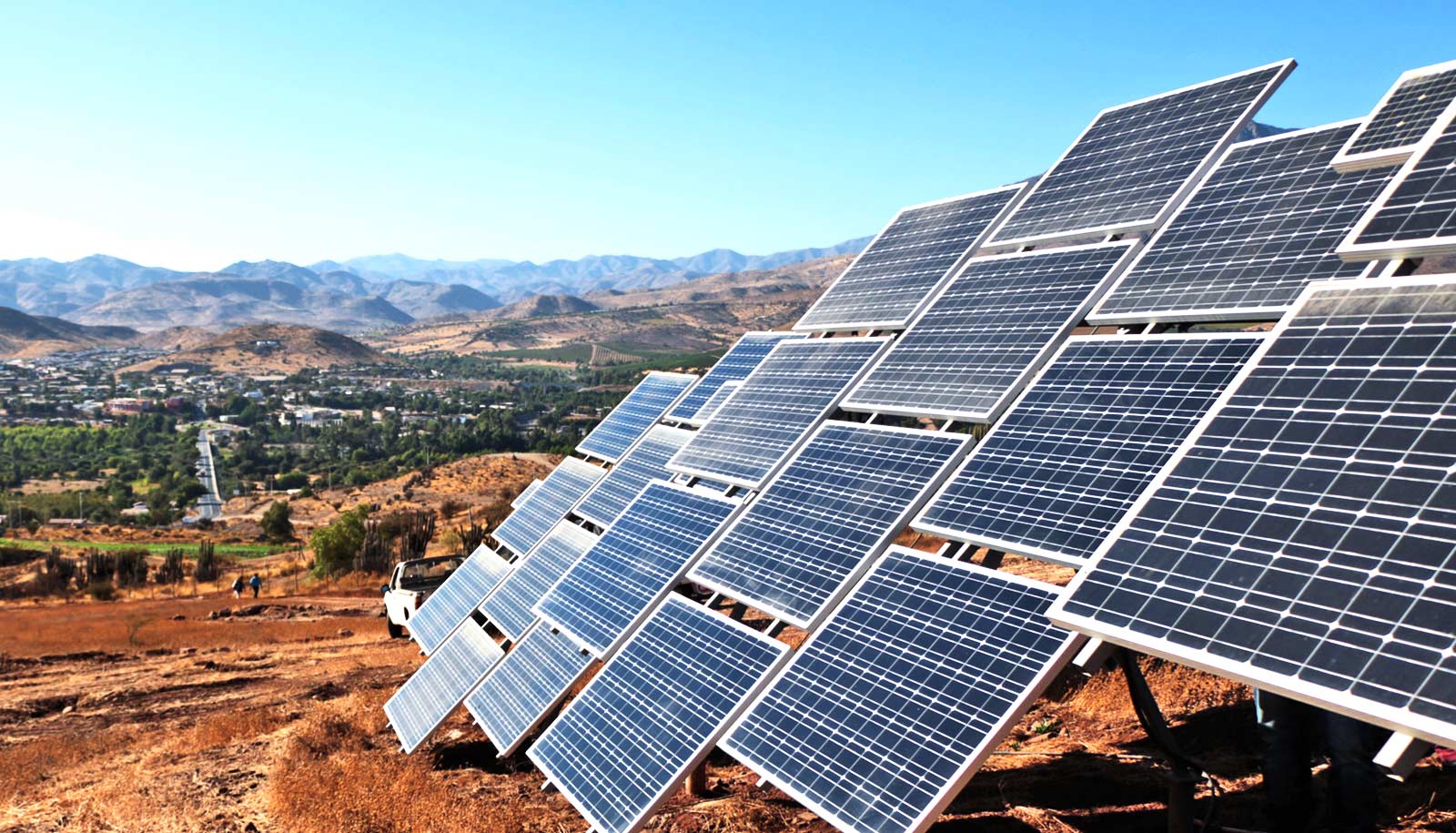
"Our results finally?demonstrate that the selective removal of electron acceptors near the?top electrode leads to highly durable organic solar cells that can even function under water without encapsulation," said Taylor.
Added Kong, "We demonstrated how much longer the cell lasts under exposure to water without significant efficiency loss," said Kong. ""Moreover, using our tape stripping technique we can control the compositional distribution in a vertical direction of the photoactive layer, which consequently leads to better charge extraction out of the solar cells."
Taylor said post-procedure stress tests included subjecting the solar units to 10,000 cycles of bending to demonstrate that the technique is robust. He explained that it also confers water resistance to organic solar cells, a boon for products such as solar-powered diving watches.
"But if you look at the obvious use case for solar panels, you have to make sure organic photovoltaics can compete against silicon on rooftops, in rain and snow. This is where organic solar cells simply have not been able to compete for a long time. We are showing a pathway to making this possible," said Taylor.
This research was supported by a grant from the National Science Foundation and an NSF Presidential Early Career Award for Scientists and Engineers.
Hydrogen is a critical component in the manufacture of thousands of common products from plastic to fertilizers, but producing pure hydrogen is expensive and energy intensive. Now, a research team at Princeton University has harnessed sunlight to isolate hydrogen from industrial wastewater.
In a paper published Feb. 19 in the journal Energy & Environmental Science, the researchers reported that their process doubled the currently accepted rate for scalable technologies that produce hydrogen by splitting water.
The technique uses a specially designed chamber with a "Swiss-cheese" black silicon interface to split water and isolate hydrogen gas. The process is aided by bacteria that generate electrical current when consuming organic matter in the wastewater; the current, in turn, aids the water splitting process.
The team, led by Zhiyong Jason Ren, professor of civil and environmental engineering and the Andlinger Center for Energy and the Environment, chose wastewater from breweries for the test. They ran the wastewater through the chamber, used a lamp to simulate sunlight, and watched the organic compounds breakdown and the hydrogen bubble up.
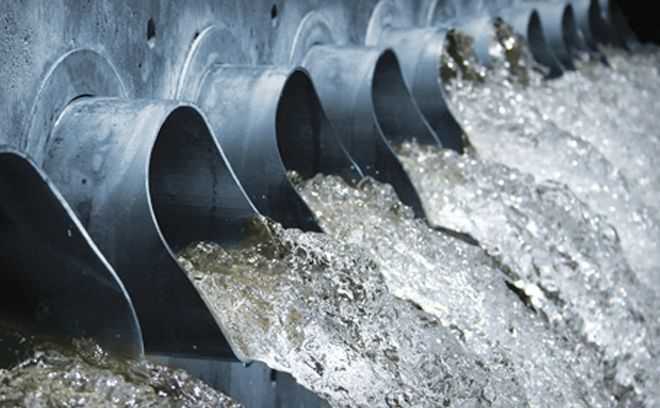
The process "allows us to treat wastewater and simultaneously generate fuels," said Jing Gu, a co-researcher and assistant professor of chemistry and biochemistry at San Diego State University.
The researchers said the technology could appeal to refineries and chemical plants, which typically produce their own hydrogen from fossil fuels, and face high costs for cleaning wastewater.
Historically, hydrogen production has relied on oil, gas or coal, and an energy-intensive method that involves processing the hydrocarbon stock with steam. Chemical manufacturers then combine the hydrogen gas with carbon or nitrogen to create high-value chemicals, such as methanol and ammonia. The two are ingredients in synthetic fibers, fertilizer, plastics and cleaning products, among other everyday goods.
Although hydrogen can be used as a vehicle fuel, the chemical industry is currently the largest producer and consumer of hydrogen. Producing chemicals in highly industrialized countries requires more energy than producing iron, steel, metals and food, according to a 2016 report from the U.S. Energy Information Administration. The report estimates that producing basic chemicals will continue to be the top industrial consumer of energy over the next two decades.
"It's a win-win situation for chemical and other industries," said Lu Lu, the first author on the study and an associate research scholar at the Andlinger Center. "They can save on wastewater treatment and save on their energy use through this hydrogen-creation process."
According to the researchers, this is the first time actual wastewater, not lab-made solutions, has been used to produce hydrogen using photocatalysis. The team produced the gas continuously over four days until the wastewater ran out, which is significant, the researchers said, because comparable systems that produce chemicals from water have historically failed after a couple hours of use. The researchers measured the hydrogen production by monitoring the amount of electrons produced by the bacteria, which directly correlates to the amount of hydrogen produced. The measurement was at the high end for similar lab experiments and, Ren said, twice as high as technologies with the potential to scale for industrial use.

Ren said he sees this technology as scalable because the chamber used to isolate the hydrogen is modular, and several can be stacked to process more wastewater and produce more hydrogen.
Though a lifecycle analysis has not yet been done, the researchers said the process will at least be energy neutral, if not energy positive, and eliminates the need for fossil fuels to create hydrogen.
The researchers said they will likely experiment with producing larger amounts of hydrogen and other gases in the future, and look forward to moving this technology to industry.
Light yet sturdy, plastic is great -- until you no longer need it. Because plastics contain various additives, like dyes, fillers, or flame retardants, very few plastics can be recycled without loss in performance or aesthetics. Even the most recyclable plastic, PET -- or poly(ethylene terephthalate) -- is only recycled at a rate of 20-30%, with the rest typically going to incinerators or landfills, where the carbon-rich material takes centuries to decompose.
Now a team of researchers at the U.S. Department of Energy's (DOE) Lawrence Berkeley National Laboratory (Berkeley Lab) has designed a recyclable plastic that, like a Lego playset, can be disassembled into its constituent parts at the molecular level, and then reassembled into a different shape, texture, and color again and again without loss of performance or quality. The new material, called poly(diketoenamine), or PDK, was reported in the journal Nature Chemistry.
"Most plastics were never made to be recycled," said lead author Peter Christensen, a postdoctoral researcher at Berkeley Lab's Molecular Foundry. "But we have discovered a new way to assemble plastics that takes recycling into consideration from a molecular perspective."
Christensen was part of a multidisciplinary team led by Brett Helms, a staff scientist in Berkeley Lab's Molecular Foundry. The other co-authors are undergraduate researchers Angelique Scheuermann (then of UC Berkeley) and Kathryn Loeffler (then of the University of Texas at Austin) who were funded by DOE's Science Undergraduate Laboratory Internship (SULI) program at the time of the study. The overall project was funded through Berkeley Lab's Laboratory Directed Research and Development program.
All plastics, from water bottles to automobile parts, are made up of large molecules called polymers, which are composed of repeating units of shorter carbon-containing compounds called monomers.

According to the researchers, the problem with many plastics is that the chemicals added to make them useful -- such as fillers that make a plastic tough, or plasticizers that make a plastic flexible -- are tightly bound to the monomers and stay in the plastic even after it's been processed at a recycling plant.
During processing at such plants, plastics with different chemical compositions -- hard plastics, stretchy plastics, clear plastics, candy-colored plastics -- are mixed together and ground into bits. When that hodgepodge of chopped-up plastics is melted to make a new material, it's hard to predict which properties it will inherit from the original plastics.
This inheritance of unknown and therefore unpredictable properties has prevented plastic from becoming what many consider the Holy Grail of recycling: a "circular" material whose original monomers can be recovered for reuse for as long as possible, or "upcycled" to make a new, higher quality product.
So, when a reusable shopping bag made with recycled plastic gets threadbare with wear and tear, it can't be upcycled or even recycled to make a new product. And once the bag has reached its end of life, it's either incinerated to make heat, electricity, or fuel, or ends up in a landfill, Helms said.
"Circular plastics and plastics upcycling are grand challenges," he said. "We've already seen the impact of plastic waste leaking into our aquatic ecosystems, and this trend is likely to be exacerbated by the increasing amounts of plastics being manufactured and the downstream pressure it places on our municipal recycling infrastructure."
Recycling plastic one monomer at a time
The researchers want to divert plastics from landfills and the oceans by incentivizing the recovery and reuse of plastics, which could be possible with polymers formed from PDKs. "With PDKs, the immutable bonds of conventional plastics are replaced with reversible bonds that allow the plastic to be recycled more effectively," Helms said.
Unlike conventional plastics, the monomers of PDK plastic could be recovered and freed from any compounded additives simply by dunking the material in a highly acidic solution. The acid helps to break the bonds between the monomers and separate them from the chemical additives that give plastic its look and feel.
"We're interested in the chemistry that redirects plastic lifecycles from linear to circular," said Helms. "We see an opportunity to make a difference for where there are no recycling options." That includes adhesives, phone cases, watch bands, shoes, computer cables, and hard thermosets that are created by molding hot plastic material.
The researchers first discovered the exciting circular property of PDK-based plastics when Christensen was applying various acids to glassware used to make PDK adhesives, and noticed that the adhesive's composition had changed. Curious as to how the adhesive might have been transformed, Christensen analyzed the sample's molecular structure with an NMR (nuclear magnetic resonance) spectroscopy instrument. "To our surprise, they were the original monomers," Helms said.
After testing various formulations at the Molecular Foundry, they demonstrated that not only does acid break down PDK polymers into monomers, but the process also allows the monomers to be separated from entwined additives.
Next, they proved that the recovered PDK monomers can be remade into polymers, and those recycled polymers can form new plastic materials without inheriting the color or other features of the original material -- so that broken black watchband you tossed in the trash could find new life as a computer keyboard if it's made with PDK plastic. They could also upcycle the plastic by adding additional features, such as flexibility.
Moving toward a circular plastic future
The researchers believe that their new recyclable plastic could be a good alternative to many nonrecyclable plastics in use today.
"We're at a critical point where we need to think about the infrastructure needed to modernize recycling facilities for future waste sorting and processing," said Helms. "If these facilities were designed to recycle or upcycle PDK and related plastics, then we would be able to more effectively divert plastic from landfills and the oceans. This is an exciting time to start thinking about how to design both materials and recycling facilities to enable circular plastics," said Helms.
The researchers next plan to develop PDK plastics with a wide range of thermal and mechanical properties for applications as diverse as textiles, 3D printing, and foams. In addition, they are looking to expand the formulations by incorporating plant-based materials and other sustainable sources.
