A new way to create molecules for drug development
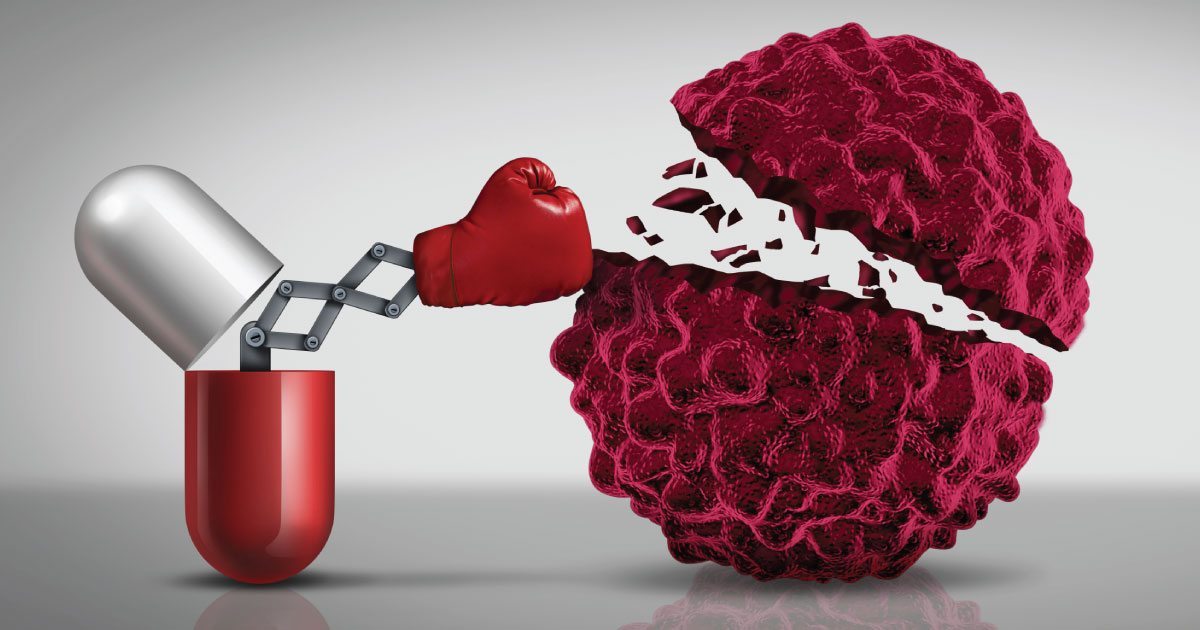


Chemists at The Ohio State University have developed a new and improved way to generate molecules that can enable the design of new types of synthetic drugs.

Researchers say this new method of forming reactive intermediates called ketyl radicals offers scientists a way to use catalysts to convert simple mole


cules into complex structures in one chemical reaction. This is done in a less harsh, more sustainable and waste-free manner.

"The previous strategy for creating ketyl radicals is about a century old. We have a found a complementary way to access ketyl radicals using LED lights for the synthesis of complex, drug-like molecules," said David Nagib, co-author of the new study and assistant professor of chemistry and biochemistry at Ohio State. The study was published Oct. 12 in the journal Science.

The story starts with carbonyls, compounds that function as one of the most common building blocks in creating potential new drugs. Unlike classic carbonyl chemistry taught in introductory organic textbooks, when carbonyls are converted to their "radical" form, they become much more reactive. These radicals, containing an unpaired electron desperately seeking its partner, enable researchers to form new bonds, in order to create complex, drug-like products.

Until now, ketyl radical formation has required strong, harsh substances called reductants, like sodium or samarium, to act as catalysts. These reductants can be toxic, expensive and incompatible with creating medicines, Nagib said.

In this study, the researchers found a way to use manganese as a catalyst that could be activated with a simple LED light.

"Manganese is very cheap and abundant, which makes it an excellent catalyst," he said. "Also, it allows us to access radicals by a complementary atom-transfer mechanism, rather than the classic electron-transfer mechanism."

Not only is manganese cheaper and more abundant, it actually is more selective in creating products with defined geometries, so they can fit into drug targets, the study found. The process is less wasteful, as well, recycling the iodine atom used to make the radicals by including it in the more functional products.

This new method to generate ketyl radicals enables researchers to create more versatile and complex structures that could be useful in generating new medicines, Nagib said.

Co-authors of the study, all from Nagib's lab at Ohio State, are Lu Wang, Jeremy Lear, Sean Rafferty and Stacy Fosu. Wang, a lead scientist on this project, recently completed her postdoctoral fellowship and now works for Merck, a major pharmaceutical company.

This research was funded by the National Science Foundation and the National Institutes of Health.

Liquid crystals and the origin of life

The display screens of modern televisions, cell phones and computer monitors rely on liquid crystals -- materials that flow like liquids but have molecules oriented in crystal-like structures. However, liquid crystals may have played a far more ancient role: helping to assemble Earth's first biomolecules. Researchers reporting in ACS Nanohave found that short RNA molecules can form liquid crystals that encourage growth into longer chains.

Scientists have speculated that life on Earth originated in an "RNA world," where RNA fulfilled the dual role of carrying genetic information and conducting metabolism before the dawn of DNA or proteins. Indeed, researchers have discovered catalytic RNA strands, or "ribozymes," in modern genomes. Known ribozymes are about 16-150 nucleotides in length, so how did thesesequences assemble in a primordial world without existing ribozymes or proteins? Tommaso Bellini and colleagues wondered if liquid crystals could help guide short RNA precursors to form longer strands.

To find out, the researchers explored different scenarios under which short RNAs could self-assemble. They found that at high concentrations, short RNA sequences (either 6 or 12 nucleotides long) spontaneously ordered into liquid crystal phases. Liquid crystals formed even more readily when the researchers added magnesium ions, which stabilized the crystals, or polyethylene glycol, which sequestered RNA into highly concentrated microdomains. Once the RNAs were held together in liquid crystals, a chemical activator could efficiently join their ends into much longer strands. This arrangement also helped avoid the formation of circular RNAs that could not be lengthened further. The researchers point out that polyethylene glycol and the chemical activator would not be found under primordial conditions, but they say that other molecular species could have played similar, if less efficient, roles.

The authors acknowledge funding from the National Science Foundation Division of Materials Research and the Invernizzi Foundation.

Nobel Prize in Chemistry Goes to a Woman for the Fifth Time in History

Since 1901, when the Nobel Prize in Chemistry was first awarded, 177 people have captured the honor. On Wednesday, Frances H. Arnold became only the fifth woman to be awarded the prize.

Dr. Arnold, 62, an American professor of chemical engineering, bioengineering and biochemistry at the California Institute of Technology in Pasadena, earned the award for her work with thedirected evolution of enzymes.

She shared this year’s chemistry Nobel — worth close to $1 million — with George P. Smith, 77, and Gregory P. Winter, 67. Dr. Arnold received half of the prize, and Dr. Smith and Dr. Winter split the other half.

Dr. Arnold won for her work conducting the directed evolution of enzymes, proteins that catalyze chemical reactions. She first pioneered the bioengineering method, which works similar to the way dog breeders mate specific dogs to bring out desired traits, in the early 1990s, and has refined it since then.

Her enzymes have been used to make biofuels, medicines and laundry detergent, among other things. In many processes, they have taken the place of toxic chemicals.

[On Tuesday, a woman was awarded the Nobel Prize in Physics for the third time ever.]

Dr. Smith was honored for developing a method, known as phage display, in which a virus that infects bacteria can be used to evolve new proteins. Dr. Winter won for evolving antibodies through phage display to combat autoimmune diseases and in some cases, cure metastatic cancer.

 “I think of what I do as copying nature’s design process,” Dr. Arnold said in an interview with NobelPrize.org. “All this tremendous beauty and complexity of the biological world all comes about to this one simple beautiful design algorithm.”

In the 1980s, Dr. Arnold tried to rebuild enzymes, but because they are very complex molecules built from different amino acids that can be infinitely combined, she found it difficult to remodel the enzymes’ genes in order to give them new properties.

In the 1990s, she abandoned what she called her “somewhat arrogant approach” of trying to create modified enzymes through her logic and knowledge, and examined nature’s way of doing things. She looked into evolution.


“I realized that the way most people were going about protein engineering was doomed failure,” Dr. Arnold said. “To me it is obvious that this is the way it should be done.”

She tried to change an enzyme called subtilisin. She wanted it to accelerate change in an organic solvent, so she created random mutations in the enzyme’s genetic code and introduced the mutated genes to bacteria that then created different types of subtilisin.

Dr. Arnold selected the type of subtilisin that performed the best. Once she found the best variant of subtilisin, she continued to mutate it until she had the very best version.

With this directed evolution, she could show the power behind allowing chance and directed selection instead of depending on human logic and understanding of how genes and enzymes are supposed to work. This was the initial step toward the revolution in enzyme mutation.

When she began her new approach, “some people looked down their noses at it,” Dr. Arnold told the National Science and Technology Medals Foundation. “They might say ‘It’s not science’ or that ‘Gentlemen don’t do random mutagenesis.’ But I’m not a scientist, and I’m not a gentleman, so it didn’t bother me at all. I laughed all the way to the bank, because it works.”


Now, Dr. Arnold said, these are some of the questions she would like to answer: “How do you evolve innovation? How do you get a whole new chemical activity that you don’t know already existed? How can I evolve a whole new species of enzymes?”

Dr. Arnold was born on July 25, 1956, in Pittsburgh. In 1979 she received her undergraduate degree in mechanical and aerospace engineering from Princeton University. She received her graduate degree in chemical engineering from the University of California, Berkeley, in 1985.

She started teaching at Caltech in 1986. In 2013 she became the director of the institution’s Donna and Benjamin M. Rosen Bioengineering Center.

Only eight Nobel Prizes have been awarded to women in physics or chemistry. It is also the first time that women have been honored with a chemistry Nobel and a physics Nobel in the same year.

Dr. Arnold, speaking Wednesday at a news conference at Caltech, predicted that “a steady stream” of future Nobel Prizes in Chemistry would be given to women.

“It’s just such a rich resource,” she said. “And as long as we encourage everyone — it doesn’t matter the color, gender; everyone who wants to do science, we encourage them to do it — we are going to see Nobel Prizes coming from all these different groups. Women will be very successful.”